Why we invested in Gallium Defense
Why we invested in Gallium Defense.
Gallium Defense comes out of stealth with a €7.1M seed round to enable drone detection at scale
Low-cost drones have changed what it takes to protect a vehicle, a base or a power station. A drone costing a few hundred euros can disable an armoured vehicle worth millions, and the radars intended to detect it were designed for a different era. The best 3D systems can cost as much as the asset they protect, so they are deployed at a small number of high-value sites and almost nowhere else. More than 80% of critical infrastructure sites and military assets remain unprotected against modern drone threats. Not for lack of will, but because affordable, field-ready radars do not exist at the numbers now required.
Gallium Defense exists to close this gap. The question the founders heard repeatedly from operators was a simple one: how do you meet the vast majority of the need at a fraction of the price. Within four month of their seed closing, they’re taking the GDS-10 into open-air field trials.
Built to Be Deployed by the Hundreds
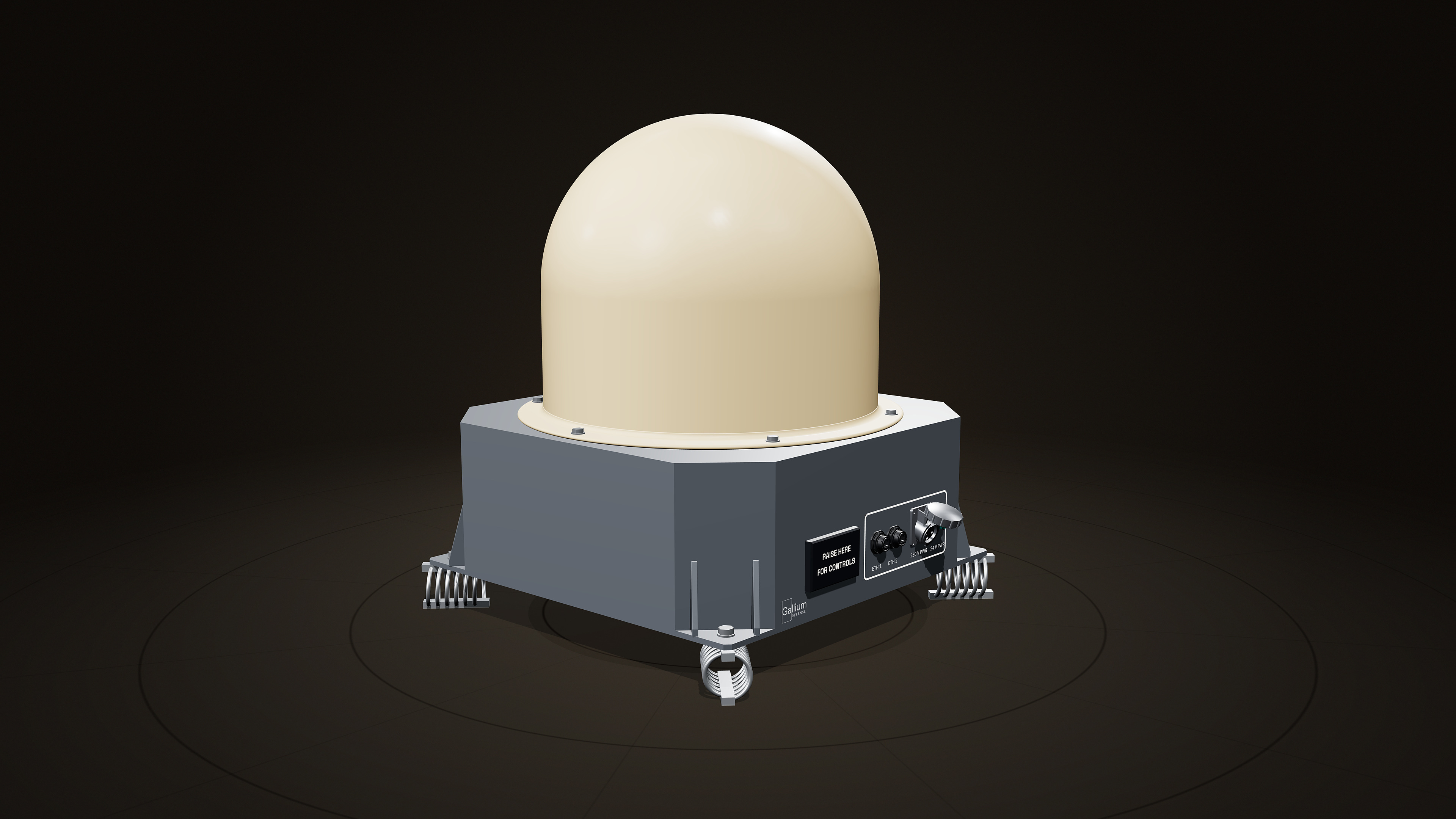
The answer is the GDS-10, an X-band AESA radar built around two decisions. First, it uses commercial off-the-shelf components wherever the design allows, sourced from telecoms, automotive and AI hardware supply chains rather than from bespoke defence routes. Second, it is software first by design. Its software-defined, AI-native architecture runs on the latest embedded GPUs, meaning detection and classification can be improved through updates rather than hardware changes, and the radar can evolve as new threats appear.
The GDS-10 is designed to detect Class 1 and FPV drones at 10 km, to cover 360 degrees in azimuth and 90 degrees in elevation with no blind spots, to track multiple drones at once including within a swarm, to operate day and night in all weather, and to integrate with existing command systems through open NATO standard interfaces. It comes in two versions, one for critical infrastructure operators and one for armed forces, on the same platform, and it is designed to be manufactured and deployed en masse.
Gallium was founded in Paris in April 2026 and is taking the GDS-10 into open air field trials only four months after closing its seed round, with orders opening in the first quarter of 2027. In radar, where development usually runs in years, that pace is unusual. It derives from working with radar specialists in the French Microwave Valley since the company’s founding, and from fielding a working system early and allowing operator feedback to determine what is built next.
The Team
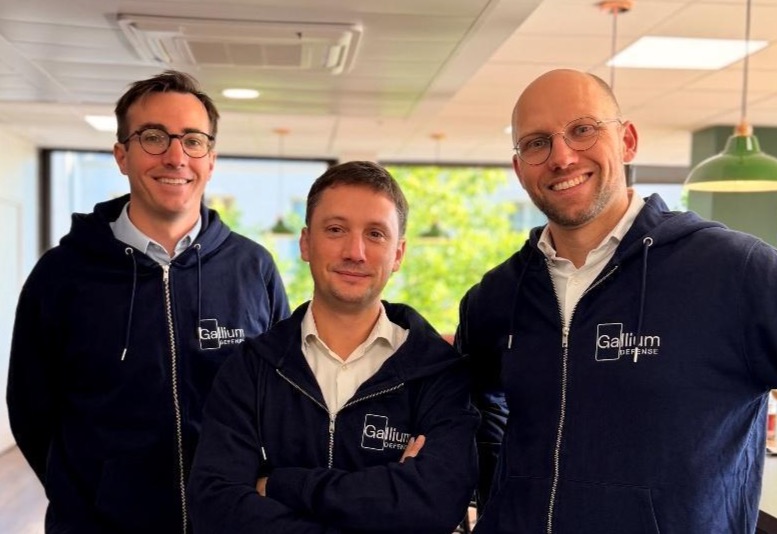
We built a lot of our conviction around the team. Between the DGA, NATO and Thales, these three have sat on every side of a radar programme, and it shows in the approach they chose to build. Eric was a Partner at BCG in its defence practice, where he led on accelerating complex programmes including radar technologies. Florian was an armament engineer at the DGA, where he led large engineering and test programmes, and later served as an industry advisor to NATO’s Supreme Allied Commander Transformation. Robin ran a 400 person engineering operations organisation at Thales. The team are supported by General Eric Autellet, former French Deputy Chief of Defence, General Philippe Lavigne, former NATO Supreme Allied Commander Transformation and former Chief of Staff of the French Air and Space Force, and Dominique Giannoni, former CEO of Exail.
What’s Next
With this round, Gallium will take the GDS-10 from prototype into production, grow the team around it, continue training the AI models that sit inside the radar, and put the system into trials with civil and military operators across Europe and allied countries ahead of first orders in early 2027. Our role alongside that is adoption. Keen’s network across the European and Allied defence industry is there to put capabilities like this in front of the people who will deploy them.
Our longer term case rests on what a software-defined radar becomes over time. Field trials and deployed units are intended to feed the detection and classification models that run on every GDS-10, so the whole fleet improves with each update, and the same platform is designed to extend to new ranges and missions as the product family grows. A radar that improves after it ships is a different product from one that is fixed on the day it leaves the factory.
We are proud to co-lead this round with 360 Capital, alongside Omnes Capital and Polytechnique Ventures, and to back Eric, Florian and Robin as they put drone detection within reach of every site.
Press Release
Gallium Defense comes out of stealth with a €7.1M seed round to enable drone detection at scale
Coinciding with European Defence Week 2026 (2–6 November, Paris), Gallium Defense emerges from stealth and announces a €7.1 million seed funding round led by Keen Venture Partners and 360 Capital, with Omnes Capital and Polytechnique Ventures participating. The company is developing the GDS-10, a 3D drone detection radar designed for mass production at a fraction of the cost of existing systems, serving both armed forces and critical infrastructure operators. Orders will open in the first quarter of 2027.
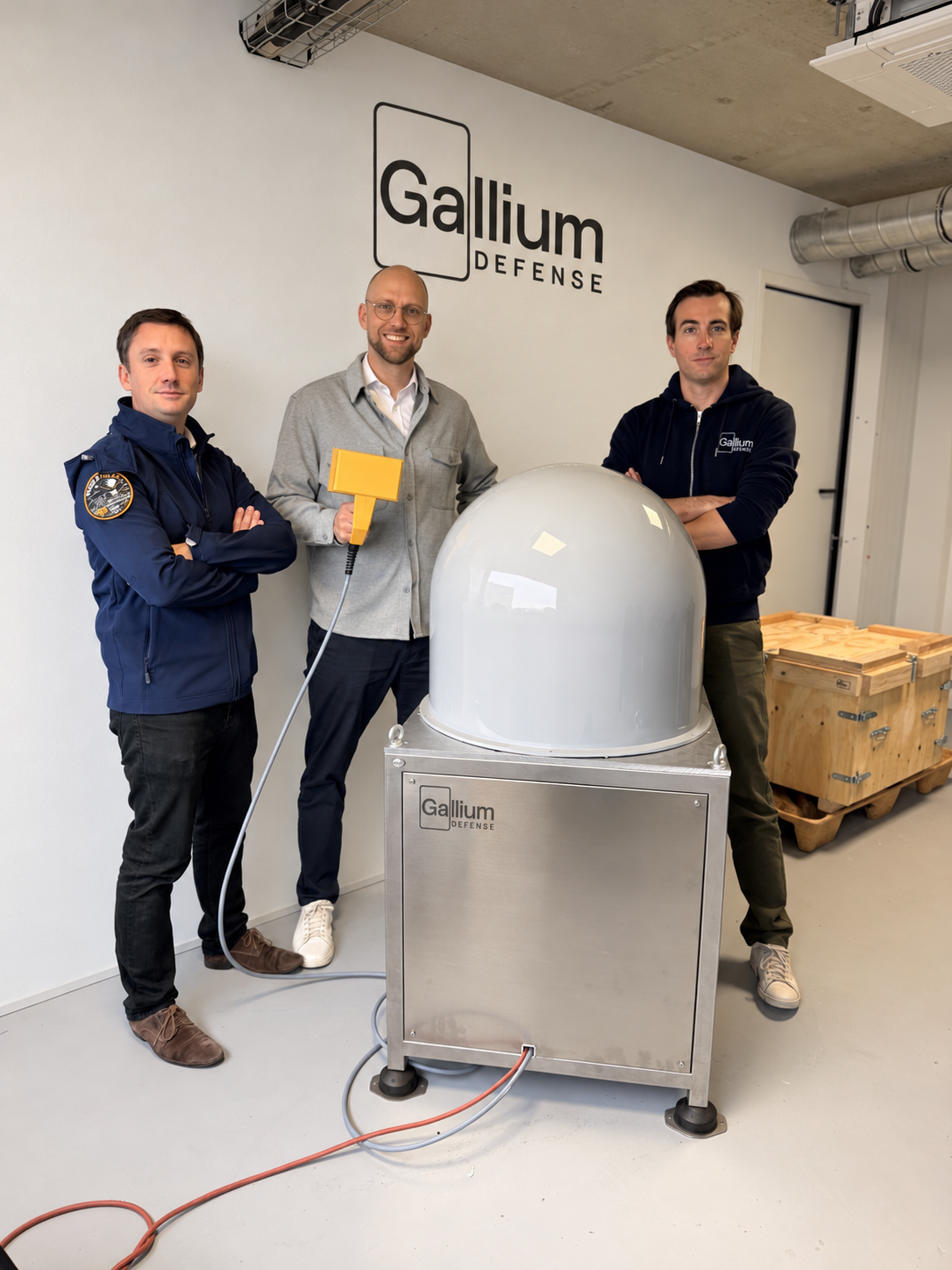
3 CO-FOUNDERS, ROOTED IN EUROPE’S DEFENSE TECH ECOSYSTEM
Gallium Defense was founded in Paris in April 2026 by Eric Fournier (CEO), formerly of Boston Consulting Group (BCG), Florian Lemoine (CTO), who previously worked at NATO, BCG and the DGA, and Robin Mandel (COO), formerly of Thales, BCG and Safran. From day one, the company has been built with strategic partners, notably specialists in radar system design & prototyping from the French Microwave Valley.
The €7.1M seed round was led by Keen Venture Partners and 360 Capital, with participation from Omnes Capital and Polytechnique Ventures. The proceeds will be used to industrialise production of the first products, strengthen the team, train AI-models and run demonstrations, for civil and military operators, around the world.
SOLVE DRONE DETECTION AT SCALE
More than 80% of critical infrastructure sites and military assets remain unprotected against modern drone threats. Not for lack of will, but for lack of affordable, field-ready radars capable of addressing the scale of this new threat.
Gallium Defense was founded to change that. Their mission: solve drone detection at scale - by making high-performance radars radically more affordable and easier to deploy, for both air security and air defense.
GDS-10: A RADAR DESIGNED FROM THE OPERATOR’S SEAT
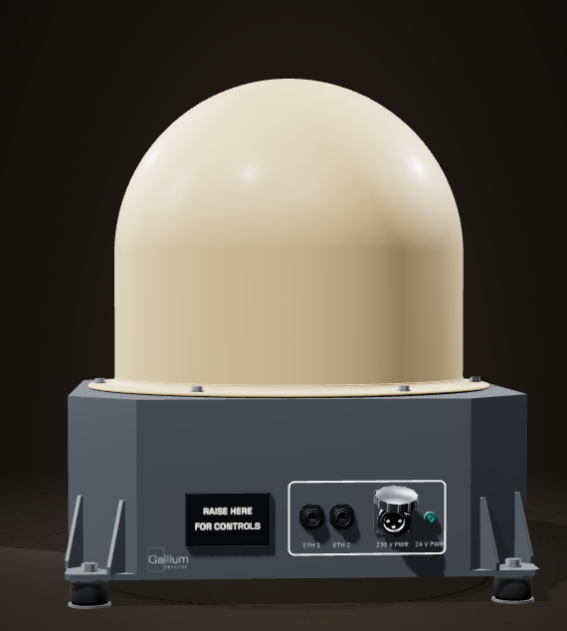
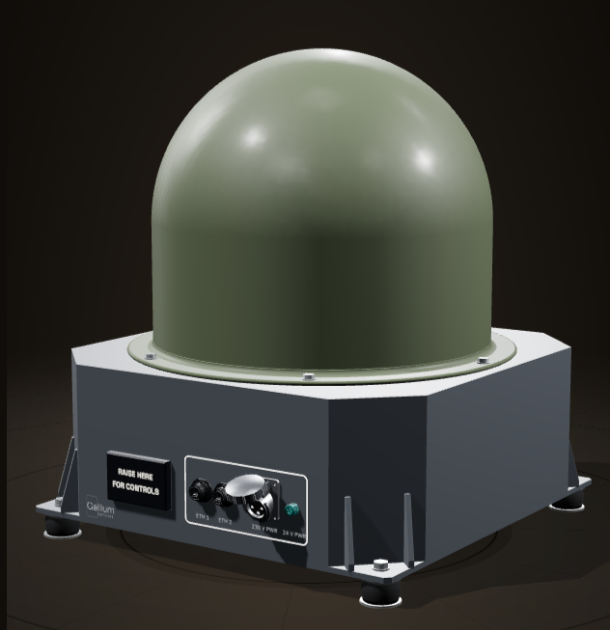
Gallium Defense is developing the GDS-10, an X-band AESA radar with a software-defined, AI native architecture. Built for dual-use, it is available in two versions: one for critical infrastructure operators, the other for armed forces.
Designed to detect Class 1 & FPV drones at 10km, track multiple targets and integrate with existing defense systems, the GDS-10 aims to make protection against aerial threats more effective and more accessible. Its software-defined architecture allows its capabilities to evolve as new threats emerge.
The GDS-10 provides 360° coverage in azimuth and 90° in elevation, with no blind spots, and can track multiple drones simultaneously, including within a swarm. By design it can operate day & night and in all weather. It can also be adapted to environments subject to electronic jamming.
At a fraction of the cost of leading competing systems, Gallium Defense aims to make large-scale radar networks a reality. “Our radars are designed to be manufactured and deployed by the hundreds, not one at a time,” stresses Robin Mandel, COO and co-founder of Gallium Defense.
SPEED AS A CAPABILITY
Just four months after closing its seed round, Gallium Defense is taking the GDS-10 into open-air field trials, a pace rarely seen in the radar industry. “We are delighted to have reached this milestone. And we will keep accelerating, with outdoor demonstrations now scheduled every month,” says Eric Fournier, CEO and co-founder of Gallium Defense. Orders open in Q1 2027, and access to demonstrations are already available.
“As drones proliferate, traditional radars are reaching their operational and economic limits. At Gallium Defense, we started from a blank sheet with a simple question, asked by operators in the field: how do you meet 80% of the need at 20% of the price? Our answer: a radically rethought AESA radar architecture that makes extensive use of commercial off-the-shelf components and the power of embedded computing. Yes, high-performance radar detection at scale is possible!” Eric Fournier, CEO and co-founder of Gallium Defense.
“Great defence starts with superior visibility. Gallium Defense has the team, the industrial partners and the cost model to make drone detection a standard layer at every critical site - the kind of European capability our fund is proud to back.” Alexander Ribbink, General Partner, Keen Venture Partners.
“Drones have turned air security and air defense into a need for thousands of sites, and today’s radars were never designed for this paradigm. Eric, Florian and Robin have moved at remarkable speed since founding Gallium, and we are proud to support them in bringing the GDS-10 as quickly as possible to the operators and armed forces who need it most.” Alexandre Mordacq, Partner, 360 Capital.